Serengeti National Park

Serengeti National Park offers the ultimate African destination with the Great Migration, endless plains, big cats, and spectacular wildlife year-round.
Home / Destinations / Serengeti National Park

About Serengeti National Park: Africa’s Greatest Wildlife Destination

This Serengeti National Park destination guide begins in northern Tanzania, where the world’s most famous wildlife spectacle unfolds across endless savannah plains. The Serengeti covers an astonishing 14,750 square kilometers (5,700 square miles), making it one of the largest national parks in Africa. Established in 1951, this UNESCO World Heritage Site is synonymous with African wilderness and is renowned for the Great Migration—the largest movement of land mammals on Earth.

The Serengeti ecosystem extends beyond the national park itself, encompassing the Ngorongoro Conservation Area, Maswa Game Reserve, and the Maasai Mara in Kenya. Together, this vast ecosystem covers approximately 30,000 square kilometers (11,600 square miles), forming one of the most important wildlife areas on the planet. The park’s name comes from the Maasai word “Siringet,” meaning “endless plains,” and the landscape truly lives up to this name with its vast, rolling grasslands stretching to the horizon.

The Serengeti is divided into several distinct regions, each offering different experiences. The Serengeti Plains in the southeast are classic savannah country, with short grass plains that support massive herds of wildebeest and zebra. The Western Corridor follows the Grumeti River, with riverine forests and permanent water sources that attract wildlife year-round. The Northern Serengeti is wild and remote, with wooded hills and the Mara River crossing points that make the Great Migration so dramatic. The Eastern Serengeti, including the Loliondo area, offers stunning scenery and fewer visitors.

What makes a Serengeti National Park destination so extraordinary is the sheer scale and diversity of its wildlife experiences. The Great Migration alone, with over 1.5 million wildebeest and 250,000 zebra, is one of the world’s greatest natural spectacles. But beyond the migration, the Serengeti offers exceptional predator viewing, incredible birdlife, stunning landscapes, and the chance to experience true African wilderness in all its raw, untamed beauty. This is Africa’s greatest wildlife destination, and for good reason.

Key Facts About Serengeti National Park

Before planning your visit, here are essential facts about this Serengeti National Park destination:

  • Total Size: 14,750 square kilometers (5,700 square miles), one of the largest national parks in Africa.
  • Serengeti Ecosystem Size: Approximately 30,000 square kilometers (11,600 square miles), including surrounding protected areas.
  • Elevation: Ranges from 920 meters in the west to 1,850 meters in the northeast.
  • Established: Gazetted as a national park in 1951.
  • UNESCO Status: Designated as a UNESCO World Heritage Site in 1981.
  • Proximity to Arusha: Approximately 335 kilometers west, about a 5-hour drive.
  • Proximity to Ngorongoro: Approximately 150 kilometers west, about a 3-hour drive.
  • Climate: Moderate temperatures ranging from 15°C to 30°C, with two rainy seasons (March-May and October-December).
  • Key Feature: The Great Migration, the largest movement of land mammals on Earth.
  • Big Cats: One of the best places in Africa to see lions, leopards, and cheetahs.
  • Bird Species: Over 500 recorded bird species, including 34 birds of prey.
  • Accessibility: Accessible by road from Arusha or by chartered flights to numerous airstrips.

Best Time to Visit Serengeti National Park

Timing your visit to this Serengeti National Park destination is crucial, as the location of the Great Migration shifts throughout the year, and different seasons offer different experiences.

Great Migration Spectacle (June to October): This is the most spectacular time to visit the Serengeti. From June to July, the migration crosses the Grumeti River in the Western Corridor, where massive crocodiles lie in wait. From July to October, the migration crosses the Mara River in the Northern Serengeti, creating one of the world’s most dramatic wildlife spectacles. The dry weather during this period also makes wildlife viewing easier, and the predators are active and visible. This is the peak season, with high rates and large visitor numbers.

Calving Season (January to February): This is a magical time to visit the Serengeti. Over 500,000 wildebeest calves are born in the southern Serengeti Plains over a few weeks, attracting predators in huge numbers. This is one of the best times for predator viewing, as lions, cheetahs, and hyenas take advantage of the abundance of vulnerable prey. The weather is warm and dry, and the visitor numbers are lower than the peak season.

Green Season (November to December): The short rains in November bring the Serengeti to life, transforming the landscape into a lush, green paradise. The migration is typically in the southern Serengeti, and the birdlife is abundant with migratory species. The scenery is at its most beautiful, and rates are lower. This is also a great time for photography, with dramatic skies and vibrant greenery.

Wet Season (March to May): The long rains from March to May bring the heaviest rainfall to the Serengeti. The park is at its most spectacular, with the endless plains turning into a green carpet. While wildlife viewing can be more challenging due to the tall grass, the birdlife is abundant, and the dramatic skies offer stunning photo opportunities. Rates are at their lowest, and the park is much quieter. However, roads can become muddy, and some areas may be inaccessible.

Activities in Serengeti National Park

This Serengeti National Park destination guide highlights the incredible activities available, from game drives and hot air balloon safaris to walking safaris and cultural experiences.

  • Game Drives: The heart of any Serengeti visit. Morning and evening game drives are most productive, offering the best chances to see the Big Five and the Great Migration in action. Experienced guides track wildlife across the vast plains, sharing fascinating insights about animal behavior and ecology. The Serengeti is one of the best places in Africa to see all the big cats, and the sheer abundance of wildlife makes every game drive an unforgettable experience.
  • Witness the Great Migration: The Serengeti is world-famous for the Great Migration, and witnessing the river crossings at the Grumeti and Mara Rivers is one of the ultimate wildlife experiences. The sight of thousands of wildebeest and zebra crossing crocodile-infested rivers, with predators in pursuit, is one of nature’s most dramatic spectacles.
  • Hot Air Balloon Safari: For a truly unforgettable perspective, take a hot air balloon ride over the Serengeti at dawn. Float silently over the endless plains as the sun rises, watching herds of wildlife roam below. The experience concludes with a champagne breakfast in the bush, making for a truly magical morning.
  • Walking Safaris: For a more intimate wilderness experience, join a guided walking safari. Accompanied by an armed ranger, explore the Serengeti on foot, learning about animal tracks, medicinal plants, and the smaller details of the ecosystem. This is a wonderful way to connect with the African wilderness on a deeper level.
  • Predator Viewing: The Serengeti is one of the best places in Africa to observe predators in action. Lion prides, cheetahs hunting on the plains, leopards in the trees, and hyenas scavenging are all common sights. Experienced guides know the best areas to find these magnificent animals.
  • Birdwatching: With over 500 species, the Serengeti is a birdwatcher’s paradise. Look for the colorful lilac-breasted roller, the majestic African fish eagle, the bizarre secretary bird, and the rare and impressive martial eagle. The diverse habitats support both resident and migratory birds, making the Serengeti one of Africa’s premier birding destinations.
  • Scenic Flights: For a breathtaking perspective, take a scenic flight over the Serengeti. View the vast plains, the winding rivers, and the distant mountains from above, gaining a true appreciation for the scale of this incredible landscape.
  • Night Game Drives: While not permitted inside the national park itself, some private conservancies in the Serengeti ecosystem offer night game drives, allowing you to spot nocturnal species like genets, civets, and the elusive leopard.
  • Cultural Visits: Explore the rich culture of the Maasai people, who have lived in harmony with the Serengeti’s wildlife for centuries. Visit a traditional Maasai manyatta (homestead), learn about their customs and traditions, and gain a deeper appreciation for their enduring way of life.
  • Visit Olduvai Gorge: Located on the edge of the Serengeti ecosystem, Olduvai Gorge is one of the world’s most important archaeological sites. Known as the “Cradle of Humankind,” this site has yielded some of the most important discoveries about human evolution. The museum on-site offers fascinating insights into our ancient ancestors.

Location and How to Get to Serengeti National Park

Location: Serengeti National Park is located in northern Tanzania, bordering Lake Victoria to the west, the Ngorongoro Conservation Area to the southeast, and the Maasai Mara National Reserve in Kenya to the north. The park is approximately 335 kilometers west of Arusha and forms part of the larger Serengeti ecosystem.

By Road from Arusha: The journey takes approximately 5 to 6 hours via the Arusha-Nairobi highway, passing through the Ngorongoro Conservation Area. The route offers spectacular views of the Ngorongoro Crater and the surrounding highlands. The final section of the journey enters the Serengeti through the Naabi Hill Gate. A 4×4 vehicle is essential, especially during the rainy season.

By Road from Ngorongoro: The journey takes approximately 3 hours from the Ngorongoro Crater. The route passes through the Ngorongoro Conservation Area and enters the Serengeti at the Naabi Hill Gate. This is a scenic drive with incredible views of the highlands and the plains beyond.

By Air: Chartered flights are available from Arusha’s Kilimanjaro International Airport or Arusha Airport to numerous airstrips throughout the Serengeti. The flight takes approximately 1 hour and offers stunning aerial views of the Great Rift Valley and the Serengeti plains. Major airstrips include Seronera (central), Kirawira (western), Kogatende (northern), and Ndutu (southern).

From Other Parks: The Serengeti is often the highlight of a northern Tanzania safari circuit. It is approximately 3 hours from Ngorongoro Crater, 5 hours from Lake Manyara, and 6 hours from Tarangire National Park. Many travelers combine the Serengeti with Ngorongoro, Lake Manyara, and Tarangire for a comprehensive Tanzanian safari experience. The Serengeti also connects to Kenya’s Maasai Mara, allowing for cross-border safaris.

Animals in Serengeti National Park

The Serengeti is one of the world’s greatest wildlife destinations, and this Serengeti National Park destination guide highlights the incredible animals that call this vast wilderness home. The sheer abundance and diversity of wildlife here is unmatched anywhere in Africa.

  • The Great Migration: The Serengeti is world-famous for the Great Migration, the largest movement of land mammals on Earth. Over 1.5 million wildebeest, accompanied by 250,000 zebra and 500,000 gazelle, migrate across the Serengeti ecosystem in search of fresh grazing. The spectacular river crossings at the Grumeti and Mara Rivers, with crocodiles and predators in pursuit, are one of nature’s greatest dramas.
  • Big Cats: The Serengeti is one of the best places in Africa to see all three of Africa’s big cats. The park is home to the largest lion population in Africa, with prides of up to 30 individuals often seen lounging in the grass or hunting on the plains. Leopards are more elusive but are frequently spotted in the acacia trees of the Seronera Valley. Cheetahs are a common sight on the Serengeti Plains, where they use their incredible speed to hunt gazelle and impala.
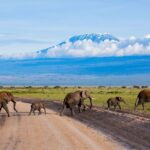
  • Elephants: The Serengeti supports a healthy population of African elephants, which are often seen in the woodlands and along the rivers. The elephants here are known for their impressive tusks and are a common sight in the park.
  • Hippos and Crocodiles: The rivers and pools of the Serengeti are home to large populations of hippos and crocodiles. The Grumeti and Mara Rivers are particularly famous for their crocodiles, which wait in the water for the migration to cross.
  • Other Mammals: The Serengeti supports an incredible diversity of mammals. Giraffes roam the woodlands, buffalos graze in large herds, hippos wallow in the rivers, and a variety of antelope species—including impalas, topi, hartebeest, eland, and dik-diks—populate the plains. The smaller mammals, like mongooses, hyraxes, and bushbabies, add to the park’s rich biodiversity.
  • Predators Beyond Cats: The Serengeti is also home to a variety of other predators. Spotted hyenas are common and often seen in large clans. Jackals are frequently seen, and the rare African wild dog is occasionally spotted in the northern Serengeti.
  • Birdlife: With over 500 recorded species, the Serengeti is a birdwatcher’s paradise. Highlights include the colorful lilac-breasted roller, the bizarre secretary bird, the majestic African fish eagle, the large and impressive martial eagle, and the vibrant superb starling. The park’s diverse habitats support both resident and migratory birds, making it one of the premier birding destinations in Africa.
  • Reptiles: The Serengeti is home to a variety of reptiles, including the large Nile crocodiles, a variety of lizards and geckos, and numerous snake species. The dry grasslands provide ideal habitat for these reptiles.

Visiting Serengeti National Park is the ultimate African wildlife experience. The sheer scale of the landscape, the abundance of wildlife, the drama of the Great Migration, and the incredible predator viewing combine to create a destination that is truly unmatched anywhere on Earth. Whether you are witnessing the river crossings, watching a lion pride hunt, or floating over the plains in a hot air balloon, the Serengeti will leave you with memories that last a lifetime. This is Africa’s most famous wildlife destination, and it lives up to every expectation.

Plan Your Safari

Ready to explore this incredible destination? Let us create your perfect safari experience.

Get a Quote

Need Help?

Our travel experts are here to help you plan your perfect safari.

Contact Us

Safaris in Serengeti National Park

3 amazing safari experiences

From $1,651
6 nights

7-Day The Big Five Tanzania Safari

Day 1 Arusha A safari guide from our office will pick you up at Kilimanjaro...
From $1,390
7 days 6 nights

7 Days Lake Manyara, Ngorongoro & Serengeti Safari

Experience an unforgettable safari adventure through Tanzania's iconic national parks. Your journey begins at...
7 Days

7-Day Northern Tanzania

7 day tanzania safari covering Arusha – Tarangire – Lake Manyara – Serengeti –...
WHATSAPP EMAIL GET QUOTE
WhatsApp Email Get Quote