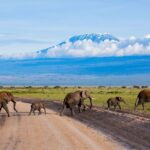
Nairobi National Park safari is a strong choice for travellers who want to understand Nairobi National Park beyond a quick stop. In Kenya, the destination is defined by open grassland, acacia woodland, river valleys and wildlife plains set against the skyline of Kenya’s capital. That setting shapes every visit, from the pace of the journey to the types of wildlife and activities that make the area memorable. Travellers can expect rhinos, lions, giraffes, buffaloes, zebras, antelopes and many bird species. The experience is especially rewarding for visitors who value time in nature, good guiding and a route that allows the landscape to unfold naturally rather than rushing from one checklist sighting to another.
For Turacova Expeditions Safaris, a visit to Nairobi National Park should connect scenery, wildlife, local context and practical planning. The main appeal includes half-day or full-day game drives, rhino viewing and easy combinations with Nairobi museums and conservation centres. A well-designed itinerary also considers travel time, weather, fitness where relevant, and the character of nearby destinations. This guide explains what makes Nairobi National Park worth visiting, what to do, when to travel, how to reach it and how to combine it responsibly with other East African experiences.
The strongest reason to include Nairobi National Park is its sense of place. Open grassland, acacia woodland, river valleys and wildlife plains set against the skyline of Kenya’s capital. This gives the destination a visual identity that cannot be recreated by simply visiting another park or town. Wildlife such as rhinos, lions, giraffes, buffaloes, zebras, antelopes and many bird species adds interest, but scenery and atmosphere often become equally important memories.
The travel experience is also varied because visitors can focus on half-day or full-day game drives, rhino viewing and easy combinations with Nairobi museums and conservation centres. That range creates room for different travel styles without forcing every guest into the same programme. A keen photographer may spend longer waiting for light, while a family may prefer shorter activity blocks and more rest. An active traveller may prioritise walking or climbing where available. Good planning recognises these differences. Turacova Expeditions Safaris therefore treats Nairobi National Park as a destination that should be matched to the traveller rather than sold as a fixed checklist.
One of the best ways to understand Nairobi National Park is to look at its habitats. The destination includes open grassland, acacia woodland, river valleys and wildlife plains set against the skyline of Kenya’s capital. Each component supports different plants and animals and creates different viewing conditions. A change in vegetation can mean a change in birds, grazing species or predator behaviour, while access to permanent or seasonal water often influences wildlife distribution.
For photographers and nature lovers, these transitions are especially important. They provide variety without requiring long transfers. Wide landscapes may be strongest in early or late light, whereas forest and river areas can remain interesting through much of the day. Visitors should also remember that protected areas are connected to wider ecosystems. Wildlife may move beyond administrative boundaries, and communities outside the destination often depend on the same water, grazing or forest resources. Responsible tourism therefore benefits from seeing the destination as part of a larger living landscape. For a well-balanced visit to Nairobi National Park, this practical detail matters.
The natural community at Nairobi National Park includes rhinos, lions, giraffes, buffaloes, zebras, antelopes and many bird species. Visitors should treat this as a guide to possibility, not a guarantee. Wildlife distribution can change quickly with rain, heat, food supply and human activity.
For that reason, time and flexibility are valuable. A slower drive or walk can reveal details missed by a rushed schedule. Guides may choose one habitat over another based on recent signs or local reports. In coastal and lake destinations, water conditions can alter what is practical. In mountains and forests, visibility may be limited even when wildlife is nearby. Understanding these realities makes the experience more authentic and reduces disappointment. The goal is not to control nature but to observe it carefully and respectfully. In the context of Nairobi National Park, it supports a more realistic travel plan.
The main experiences include half-day or full-day game drives, rhino viewing and easy combinations with Nairobi museums and conservation centres. Which activities deserve priority depends on the traveller. First-time visitors may want the best-known experience, while repeat travellers often prefer more specialised walks, photography, birding or cultural encounters. Families may need shorter sessions, and active travellers may want longer hikes where the destination allows them. This is part of what gives Nairobi National Park a destination-specific character.
One useful way to deepen the journey is to read about Wildlife Safaris. That page covers a related experience without duplicating the destination information in this guide. Travellers building a longer route can also consider Lake Nakuru Day Trip from Nairobi, which connects Nairobi National Park to a different stage of the journey. These links are included because they are contextually useful, not simply to increase the number of links on the page.
Whatever activities are chosen, schedules should remain realistic. Nature activities may start early, roads can take longer than expected, and weather can change plans. Leaving some margin in the day usually produces a calmer and more enjoyable trip. That detail is especially useful when planning time at Nairobi National Park.
the park can be visited all year; early morning drives are especially useful for wildlife activity and cooler conditions. This means there is rarely one perfect month for every traveller. The best time depends on whether the priority is wildlife visibility, green scenery, photography, hiking comfort, birding, beach conditions or fewer visitors. For Nairobi National Park, this can influence how the day is paced.
Seasonal planning should also consider the wider itinerary. A traveller combining several regions may need to compromise between different weather patterns. Instead of choosing dates from a single online statement, it is better to discuss the exact route and activities. Turacova Expeditions Safaris can then advise what conditions are normally like and what flexibility may be useful. Whatever the season, visitors should pack for local variation rather than assuming that a tropical destination is always hot and dry. It is one reason Nairobi National Park should be planned on its own terms.
Located immediately outside central Nairobi and reached by road from hotels, the airport and city neighbourhoods. Travellers should confirm the correct gate, airstrip, harbour or trailhead because some destinations have several access points that are not interchangeable. At Nairobi National Park, local conditions can make this point particularly important.
It is also wise to consider arrival time. Activities may have fixed briefing times, park gates may operate within set hours, and boat or hiking departures can depend on daylight. A well-planned transfer leaves margin for normal delays. When the destination is remote, carrying water, basic snacks, charging options and the right documents can make the journey more comfortable. This helps visitors understand what is genuinely distinctive about Nairobi National Park.
Its urban setting makes the park a useful place to understand the relationship between city growth, wildlife corridors and conservation. The relationship between conservation and local livelihoods can be complex, and visitors benefit from guides who can explain it without oversimplifying. For a well-balanced visit to Nairobi National Park, this practical detail matters.
Tourism works best when nearby communities receive genuine benefits through employment, guiding, accommodation, craft sales or conservation partnerships. Travellers can contribute by choosing reputable services and treating cultural visits as exchanges rather than performances. Respectful behaviour also includes appropriate dress where relevant, asking before taking close photographs and following local advice. These habits help make tourism more welcome and sustainable. The point is worth keeping in mind when building a route around Nairobi National Park.
Give Nairobi National Park enough time to make sense. The combination of open grassland, acacia woodland, river valleys and wildlife plains set against the skyline of Kenya’s capital deserves more than a rushed arrival and departure. Even where the main activity lasts only a few hours, the surrounding scenery, local context and journey can add meaning.
Pack carefully, listen to local guidance and keep the itinerary realistic. Avoid overpromising wildlife and allow weather to influence the day when necessary. If an activity is physically demanding, plan rest around it. If the destination is remote, prioritise dependable logistics. If it is cultural or community-based, travel with humility and respect. This is part of what gives Nairobi National Park a destination-specific character.
With these principles in place, Nairobi National Park can become a memorable part of a wider East African journey. The objective is not simply to visit more places; it is to understand each place better and to connect it naturally with the rest of the safari.
Nairobi National Park should be planned for its own strengths. Its setting of open grassland, acacia woodland, river valleys and wildlife plains set against the skyline of Kenya’s capital creates different opportunities and limitations from other destinations in Kenya. That is why a useful itinerary should not simply copy the timing, wording or expectations of another safari area. It should reflect the actual activities, travel conditions and natural rhythm of the place. This destination-specific approach helps travellers make better choices and helps protect each page from competing with another page that answers the same question.
0 amazing safari experiences
No safaris available for this destination yet.
Contact us to create a custom itinerary.